RésiScan
32-electrode resistivity meter for concrete resistivity measurement
Description
Precise measurement of concrete resistivity is a key element for the maintenance, durability and safety of civil engineering structures. The RésiScan offers an innovative solution to the persistent challenges encountered in these areas.
Equipped with 32 electrodes that can act as emitters or receivers, the RésiScan automates the acquisition of complete measurement sequences (Wenner, Schlumberger, dipole-dipole, etc.) for material characterization and structural monitoring.
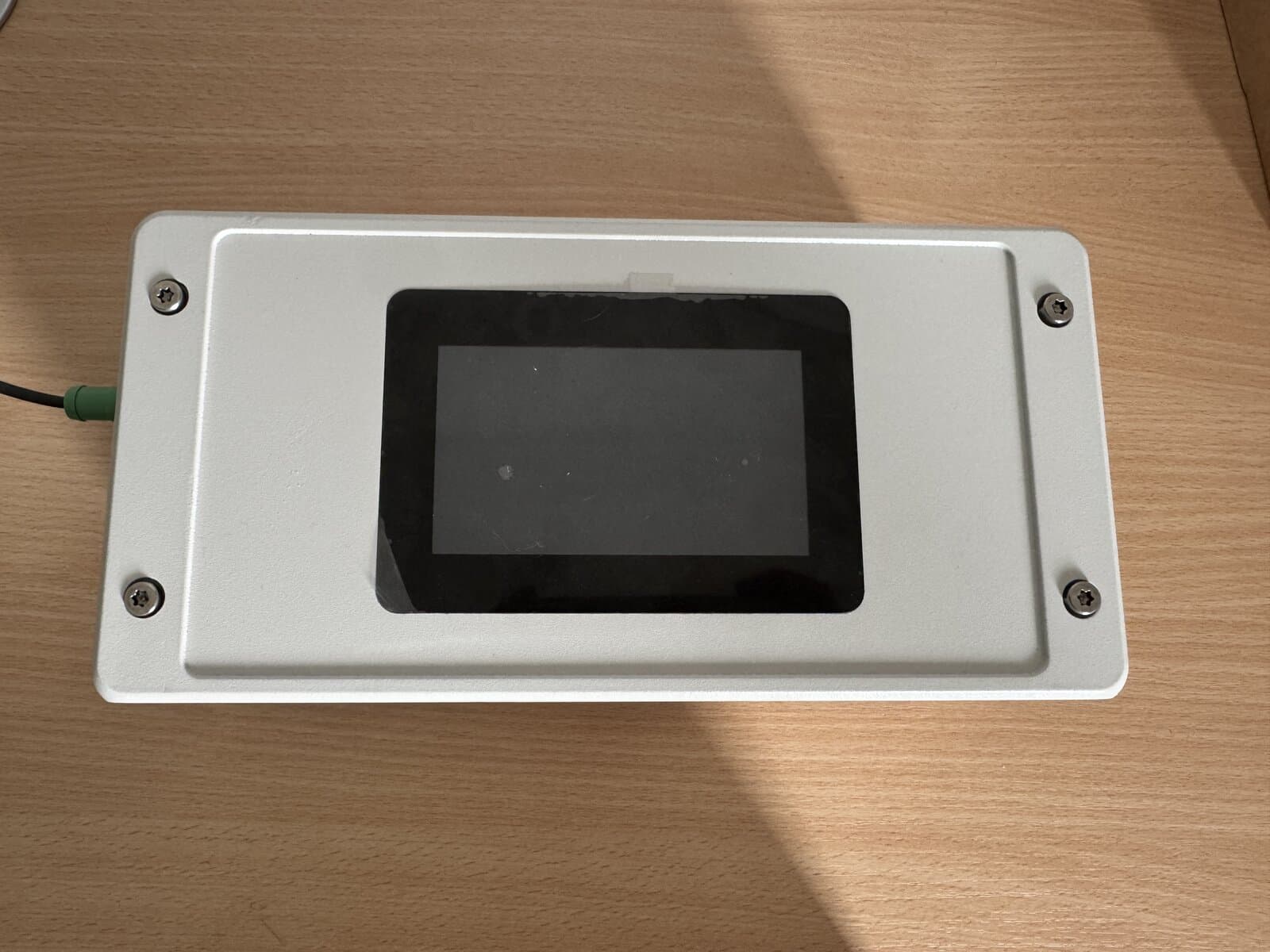
The enclosure integrates a 4.3″ touchscreen, an embedded web server and USB / Ethernet / FTP connectivity to control the instrument, configure sequences and automatically export results to your infrastructure.
Main features
32 multiplexed electrodes
Each channel can emit or receive
Each of the 32 electrodes can be configured as emitter or receiver during a measurement sequence. Injection and measurement are performed by electrode pairs, allowing classic configurations (Wenner, Schlumberger, dipole-dipole, etc.) to be run automatically from a simple sequence file.
High-dynamic emission
0 to ±50 Vdc, 0.01 to ±100 mA, 5 W max
The generator produces a square wave with two regulation modes: constant injection voltage (Vab) or constant injection current (Iab). Pulse duration, number of alternations and induced polarization (zero crossing between ON+ and ON-) are fully configurable.
High-resolution reception
10 µV on Vmn, 10 µA on I, 500 Hz
On the receive side, the RésiScan measures potential differences from 0 to ±10 V with a resolution of 10 µV on Vmn, 10 mV on Vab and 10 µA on current. The 500 Hz sampling rate ensures fine characterization of each pulse, including with induced polarization.
Embedded web server
Remote control and FTP export
An integrated web server, accessible directly via USB or over your Ethernet network, lets you configure injection and acquisition parameters, launch sequences, monitor measured values in real time and run a contact resistance test on the 32 electrodes. Results are automatically exported to an FTP server.
4.3″ touchscreen
Local control without a PC
The integrated 4.3″ touchscreen LCD (480×272) enables field use without a computer: real-time monitoring of voltages and currents, quick 4-electrode configuration in manual mode, browsing of stored sequences and system info (IP, FTP, firmware).
Storage and measurement modes
Built-in microSD, Manual / Sequence / Monitoring modes
An embedded microSD card stores sequence files, configurations and all results. Three modes are available: Manual for a one-shot measurement on 4 electrodes, Sequence to run a full multiplexing file, and Monitoring to automatically repeat up to 3 sequences at configurable intervals.
ResiSoft software
Configure your acquisition protocols and analyze your measurements with our dedicated software
Acquisition protocol
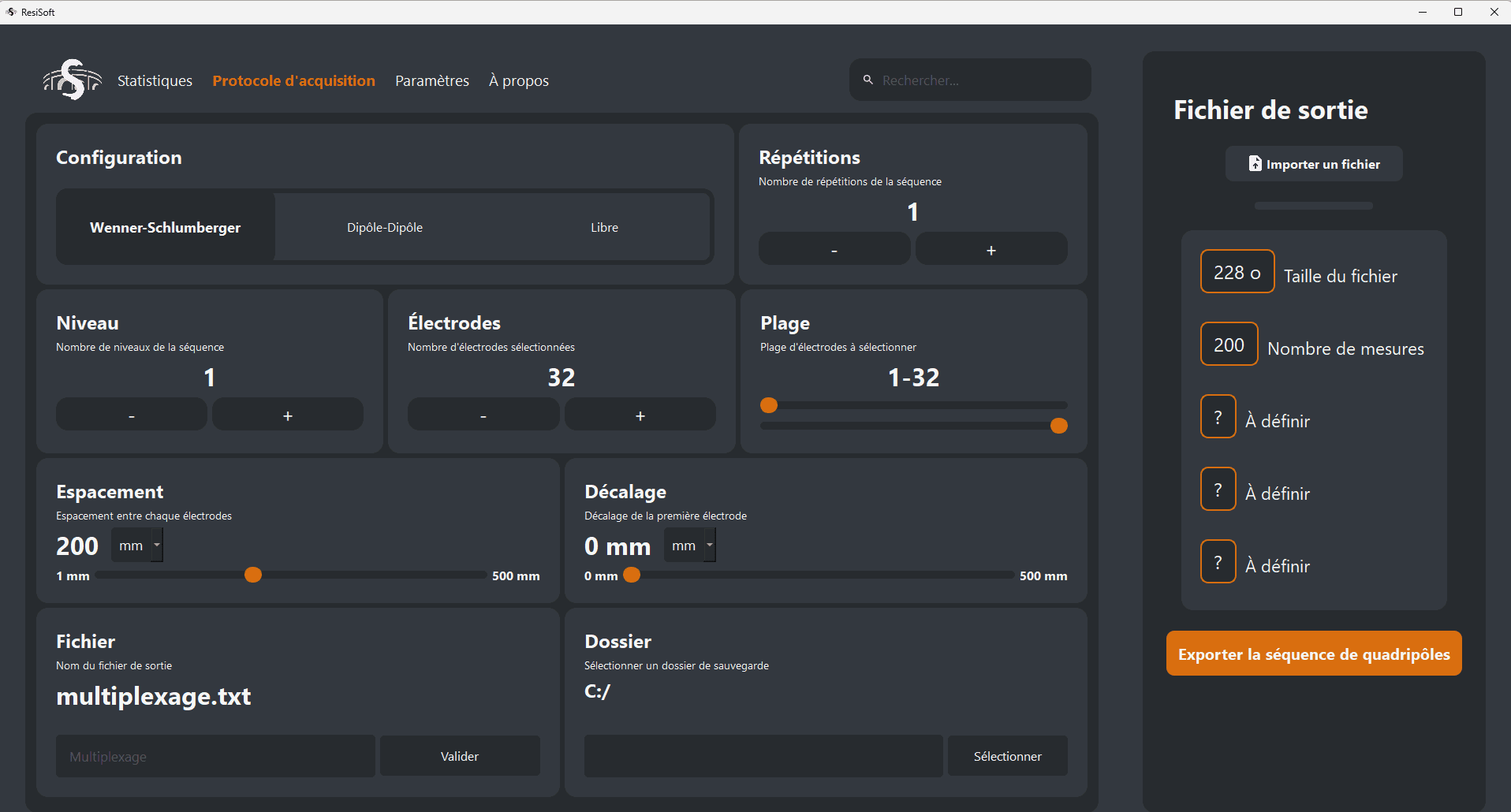
Define Wenner-Schlumberger, dipole-dipole or custom sequences, choose electrodes, spacings and repetitions, then export the multiplexing file ready to be loaded into the RésiScan.
Statistics and visualization
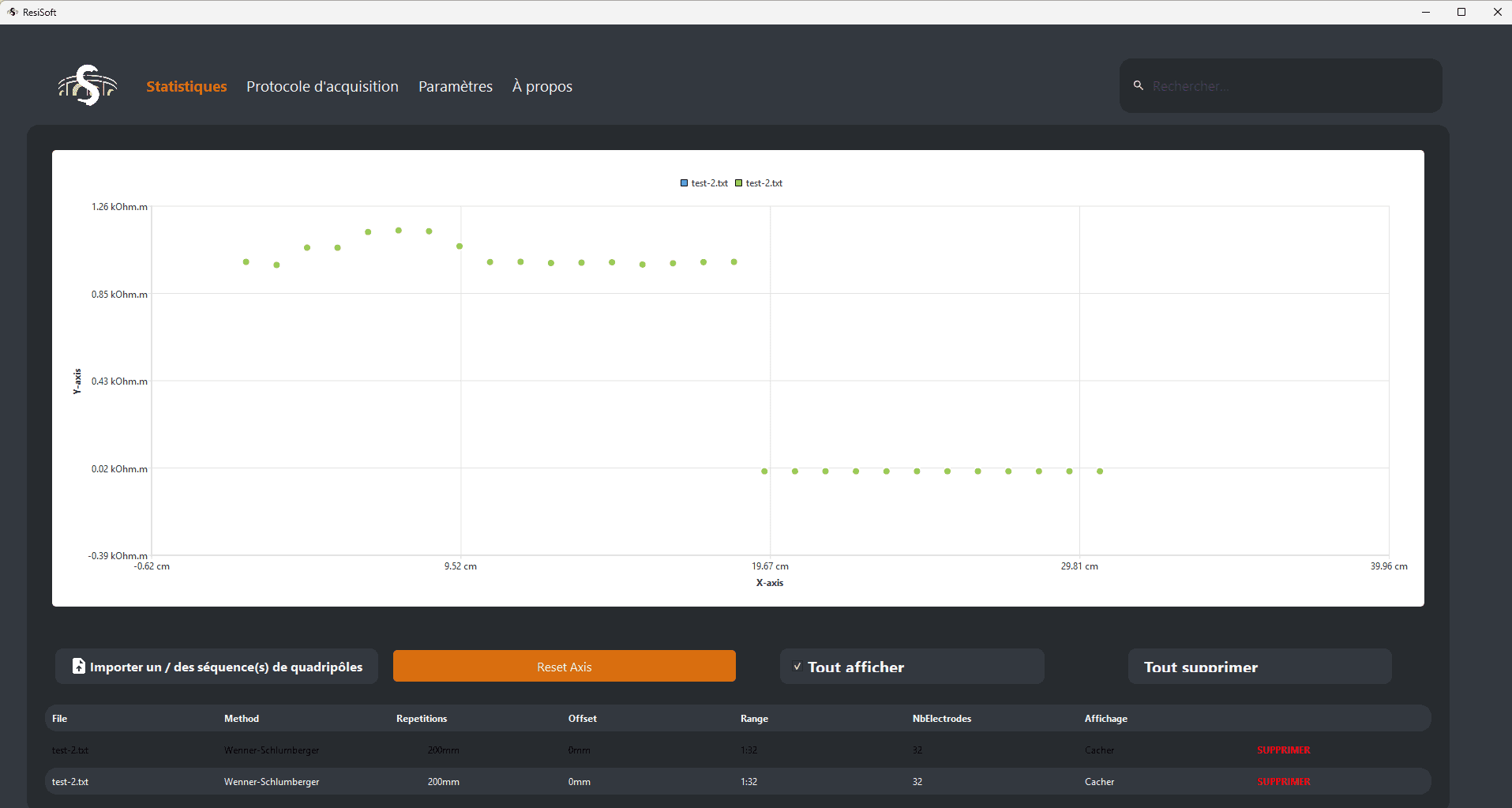
Import measurement files and visualize resistivity vs. position, compare several sequences on the same graph, and export results for analysis.
Applications
The RésiScan targets materials studies and civil engineering structural monitoring
Materials studies
Characterization of concrete resistivity in the lab or on structures, at different curing and operational stages
Structural monitoring
Long-term tracking via Monitoring sequences to detect resistivity changes linked to corrosion or aggressive agent penetration
Civil engineering diagnostics
Diagnostics of engineering works, bridges, slabs and reinforced concrete structures via automated multiplexed sequences
Partners
RésiScan is developed in partnership with RcosPi and Université Gustave Eiffel